
From skin repair materials in medical-engineering collaboration
to cutting-edge applications in the low-altitude economy,
from technological breakthroughs in energy storage materials
to in-depth explorations in the field of geophysics,
researchers at Wuhan University of Technology (WUT)
are continuously striving in the scientific field,
delivering this impressive scientific research achievements!
Healing with a “Band-Aid” A Bionic Leap in Skin Repair
Conditions like skin ulceration and non-healing after burns, or recurrent infections in diabetic foot ulcers, traditional skin grafting often leaves permanent scars. These have caused immense suffering for countless patients.
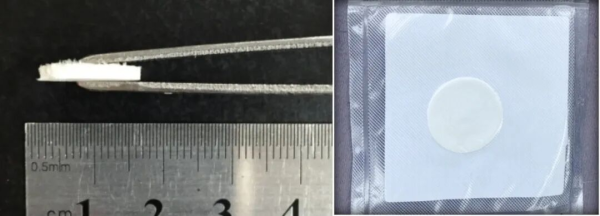
Now, an interdisciplinary medical-engineering team, formed by the State Key Laboratory of Advanced Technology for Materials Synthesis and Processing at WUT and Zhongnan Hospital of Wuhan University, has developed a “biocomposite material for reconstructing full-layer skin function”. Resembling a band-aid in appearance, it promotes wound healing, restores skin function, and reduces scarring as much as possible. This “native-like skin” repair material is primarily made from silk fibroin and sodium alginate, with optimized ratios of natural polymer materials added. Using an “organic-inorganic” material composite technology, the material's degradation rate is precisely controlled.
This is currently one of the few bionic repair technologies internationally capable of inducing the regeneration of skin appendages like hair follicles and sweat glands, thereby restoring skin function. Moreover, it can be metabolized by the body after healing is complete, without burdening the body.
Whether for diabetic foot ulcers, deep burns, or oral and maxillofacial defects, this material demonstrates excellent repair effects, holding great promise for clinical application.
Powering the Microscale Breakthroughs in Energy Storage
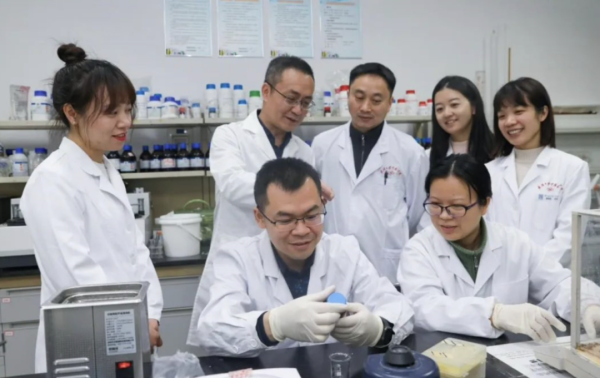
Professor Mai Liqiang’s technical team, after over 20 years of dedicated research, has broken through the bottleneck of electron/ion transport kinetics under high loading in micro energy storage batteries. They have achieved batch production of ultra-high-power micro energy storage batteries. Compared to commercially available coin-type lithium-ion batteries of the same size, the maximum current of their micro energy storage battery is 700 times higher, placing it at an internationally leading level. Due to its thin and light configuration, when applied to high-speed rotating blades, it can operate stably without altering the blade's aerodynamic profile. Related achievements were selected among China's Top Ten Advances in Chip Science.
In the area of novel battery lithium compensators, this team developed an air-stable, low-cost, high-performance cathode lithium compensator material. This extends the battery's cycle life by 4 times compared to batteries without a lithium compensator, and by 2 times compared to batteries using other commercial lithium compensators.
The largest low-altitude wind wall in South-Central China is now complete in WUT
With the booming development of the low-altitude economy, the safety performance of aircraft in flight has become a critical issue in commercial aviation operations. Since the first half of last year, WUT has been developing a modular testing system consisting of a closed-loop wind tunnel and an open wind wall.
In the WUT’s Low-Altitude Wind Environment Laboratory, a wind wall stands 3.5 meters high with a wind outlet area of 9 square meters. Embedded with over 1,300 fans set in a grid pattern, it can instantly simulate a variety of wind fields from gentle breezes to gusty and gale-force winds. The steady flow section achieves a maximum wind speed of 17 meters per second, equivalent to Force 8 on the Beaufort scale. By reducing the wind outlet area, the system can generate winds reaching Force 10.
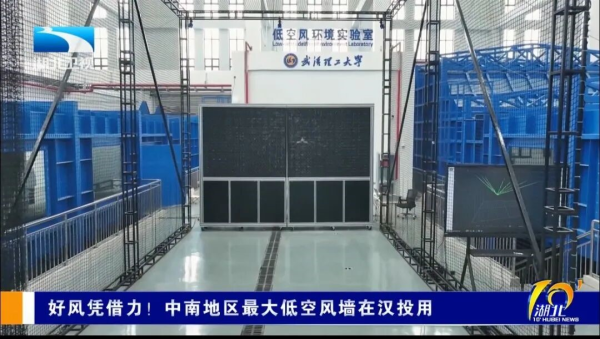
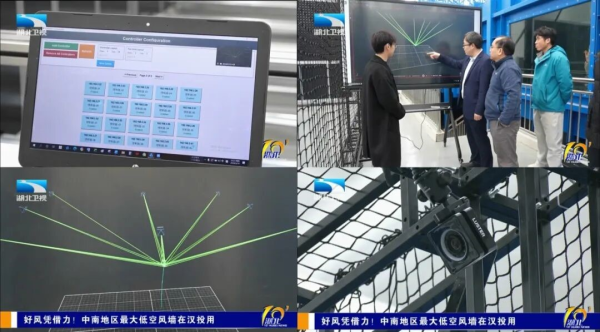
Through repeated optimization of control algorithms, the research team has found the optimal balance between fan speed and wind field uniformity, enabling over 1,300 fans to operate independently. Multiple high-speed cameras have been installed around the wind wall, forming a millimeter-scale motion capture system that monitors aircraft flight attitudes and trajectories in real time. This provides critical data for aircraft design and airworthiness certification.
A key challenge in geology is overcome
The Earth still holds countless mysteries. The core lies 2890 to 6370 kilometers beneath the surface, under extreme temperatures and pressures, which makes direct sampling impossible. The composition of light elements in the core has long been a profound puzzle in geoscience.
To address this problem, Prof. Huang Haijun’s team has conducted extensive research, collaborating with domestic and international institutions to achieve in-depth interdisciplinary integration of high pressure physics and geophysics and to carry out dynamic high-pressure experiments using devices such as two-stage light gas guns. Their experimental results have overturned long-standing assumptions in the field and proved that the core is not oxygen-rich or silicon-rich, as previously thought, but instead exhibits features of being oxygen-poor, silicon-poor, and sulfur-rich. For the first time, the team has determined that the Earth’s outer core consists primarily of iron (91.5% by weight), with oxygen (2.2%), sulfur (5.3%), and silicon (1%). This finding significantly delineates the research scope on light elements and opens a new pathway for core studies.
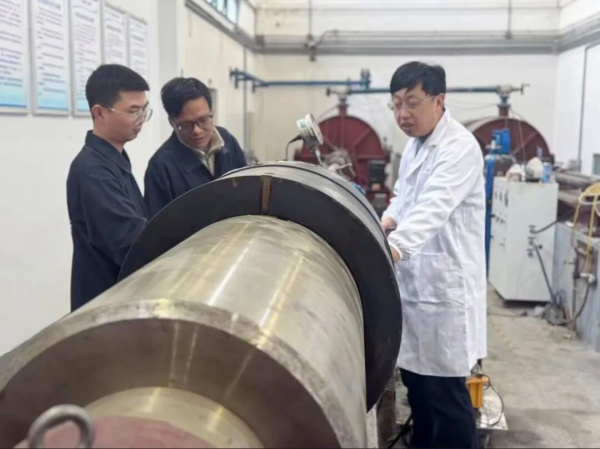
Based on this precise compositional model, the team used experimental results and thermodynamic models to define the temperature at the boundary between Earth’s solid inner core and liquid outer core at approximately 5,000 Kelvin (about 4727℃), nearly 1,000℃ lower than previous estimates. This finding overturns the long-held notion that the Earth’s core is as hot as the surface of the Sun.
Professor Huang Haijun’s team has redefined the temperature of the Earth’s core and the composition of its light elements, accurately determining the types and proportions of key light elements in the core. These results provide critical parameters for unlocking deeper mysteries of the Earth. The research also offers important insights into the evolutionary mechanisms of habitable exoplanets in the solar system and supports the search for habitable superior planets.
From the lab to real-world applications,
from tackling technical challenges to breaking new grounds,
every breakthrough is a powerful response
to the questions of our time.
Wuhan University of Technology remains committed to
transforming scientific and technological achievements and innovation into productivity,
continuing to write new chapters at the forefront of industries
and the frontiers of science.
Rewritten by: Xu Hanyue, Mei Mengqi
Edited by: Li Huihui, Li Tiantian
Sources: Changjiang Daily, Hubei Daily, Changjiang Cloud News
|
|